All articlesPublic-private partnerships
Public-Private Partnerships (P3) 101
Consider a common scenario playing out across the country: a community has been operating out of a fire station built 80 years ago and is now reaching the end of its useful life. The building lacks modern equipment, fall...

Managing Director
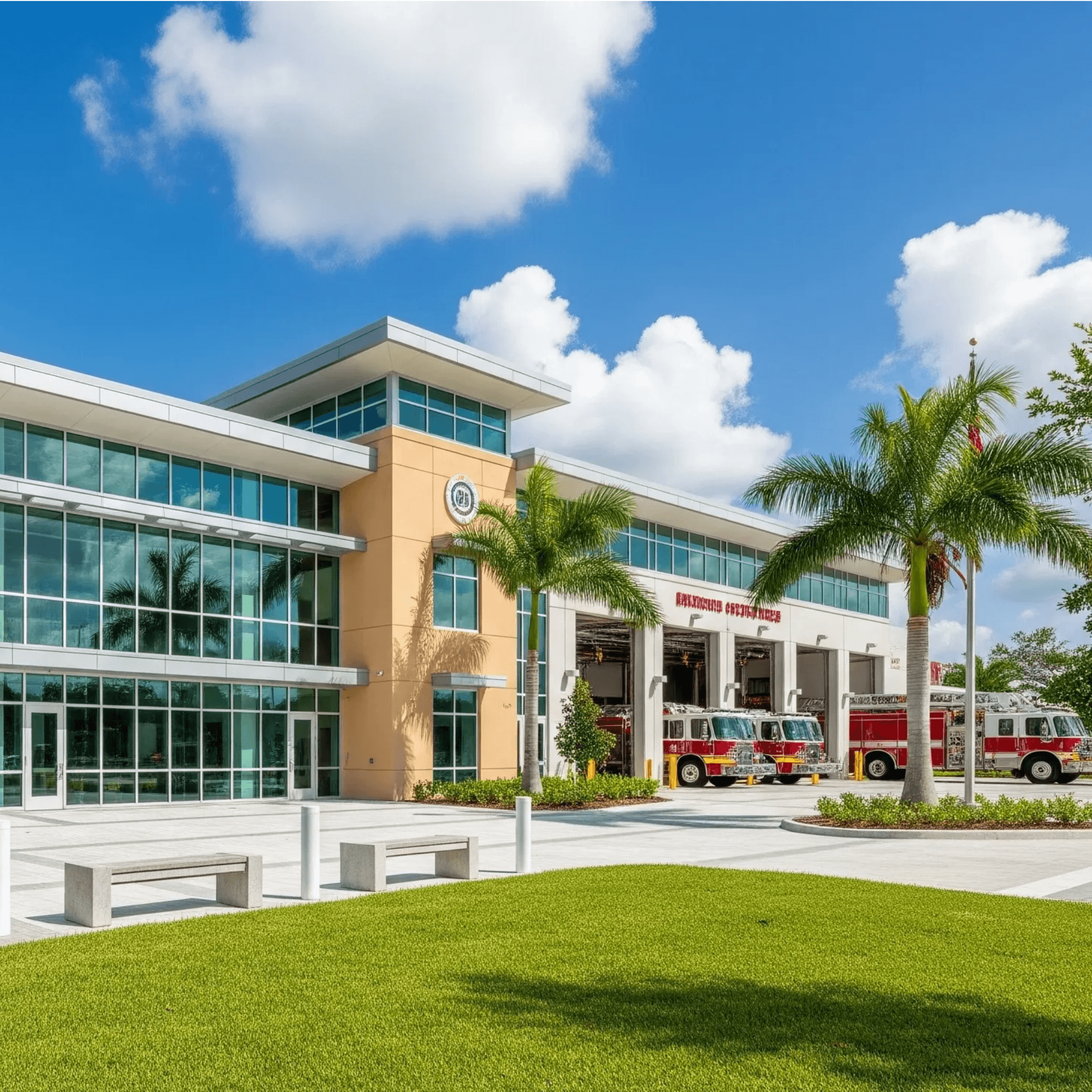
Consider a common scenario playing out across the country: a community has been operating out of a fire station built 80 years ago and is now reaching the end of its useful life. The building lacks modern equipment, falls short of current environmental and safety standards, and can no longer support its growing workforce.
Bringing aging public facilities up to modern standards requires significant capital investment. Yet capital budgets are stretched thin, and traditional funding and construction methods can make large-scale modernization difficult.
This is where a public-private partnership, or P3, can provide an alternative approach to financing and delivering a public facility.
What is a Public-Private Partnership (P3)?
A public-private partnership, commonly called a P3, is a long-term contractual agreement between a public entity and a private partner to develop and deliver public infrastructure. The private partner assumes responsibility for the financing, design, construction, and in some cases, operation and maintenance of the asset, transferring construction and financing risk away from the public sector.
The core objective of a P3 is to leverage private-sector capabilities in the development and delivery of public assets through access to capital, project management expertise, construction capabilities, and long-term accountability. At the same time, the public entity maintains control over the facility's public purpose, requirements, and contractual performance standards.
Key Takeaways
- A public-private partnership (P3) is a long-term contractual arrangement in which a private partner assumes the financing, design, construction, and/or operations & maintenance of a public facility to transfer key risks away from the public sector.
- P3s can be used to develop and deliver critical public assets, such as fire and police stations, courthouses, emergency operations centers, community centers, and other civic buildings.
- P3s can take on different structures depending on a community’s specific needs, financial position, risk tolerance, and long-term goals.
- Potential benefits include access to broader sources of capital, greater visibility into long-term costs, allocation of certain project risks to the private partner, streamlined project delivery, and access to private-sector expertise.
- P3s offer meaningful benefits, but communities should consider the structure, cost, risks, and long-term contractual obligations before deciding whether a P3 is the right delivery method.
How does a P3 Work?
While every project is structured around community-specific needs, a P3 for public facilities may follow a similar lifecycle:
- Needs Assessment: The public entity identifies a facility need, such as an aging fire station, undersized police facility, or a public works building that no longer meets modern standards.
- Feasibility and Partner Engagement: The community evaluates whether a P3 structure is appropriate for the project. A private partner may work with the public entity to assess the opportunity, including the project scope, financing options, delivery structure, and the community's long-term priorities.
- Project Structuring: Once both parties are aligned on the project's objectives, the terms of the partnership are defined. Such terms may address financing, permitting, property acquisition, design, construction, operations, maintenance, payment terms, performance requirements, and other responsibilities. Depending on the community's budget, debt capacity, and long-term goals, the partnership can take different forms, from long-term lease arrangements to full design-build-finance-maintain models.
- Design and Construction: The private partner manages the design and construction process, with the agreement establishing responsibilities for schedule, costs, quality, and performance. Cost certainty and schedule accountability are typically built into it.
- Operations and Management: Depending on the structure, the private partner may operate and maintain the facility, or those responsibilities may remain with the public entity. The specific obligations are established in the original agreement.
- End of Term: At the conclusion of the agreement, the parties follow the terms established in the contract. Depending on the structure, this may include transferring ownership to the public entity, extending or renewing the arrangement, or transitioning to another delivery structure.
Types of Public-Private Partnership (P3) Delivery Models
Public-private partnerships can be structured in several ways depending on a community’s needs, risk tolerance, financial position, and long-term objectives. Common structures used in public infrastructure include:
- Build-Lease-Transfer (BLT): The private partner finances and builds the facility, then leases it to the public entity over an agreed term. Ownership of the facility transfers to the public entity according to the terms of the agreement.
- Design-Build-Finance-Maintain (DBFM): The private partner handles the design, construction, financing, and asset maintenance, under a single contract. The public sector retains ownership and operates the facility and typically makes contractual payments tied to the availability or performance of the facility.
- Build-Operate-Transfer (BOT): The private partner finances and builds the facility, as well as operates and maintains the facility for an agreed period. Depending on the project, the private partner may generate revenue through user fees or other project-related payments during the operating period before transferring the asset to the public sector at the end of the agreement.
Of note, these models are not one-size-fits-all. The appropriate structure depends on the nature of the facility, the responsibilities the public entity wants to retain, available financing, project risks, and the community's long-term objectives.
Benefits of Public-Private Partnerships
P3s offer a fundamentally different approach to delivering public infrastructure. Depending on the project and how the partnership is structured, they may provide several potential benefits to communities.
Financial Benefits
*Access to broader sources of capital.* Traditional public procurement often relies primarily on municipal bonds, appropriated funds, or other public sources. P3s can introduce private equity and debt, giving communities more financing options and greater flexibility to fund critical projects without overburdening local budgets.
*Greater visibility into long-term costs* P3 agreements can establish defined contractual payment structures over the life of the agreement, helping communities understand and plan for long-term facility costs.
*Preservation of borrowing capacity.* Depending on the structure and applicable accounting and financing requirements, a P3 may provide an alternative to traditional municipal borrowing, potentially preserving borrowing capacity for other community priorities.
*Lower lifecycle costs.* Private partners are contractually incentivized to consider long-term maintenance and lifecycle costs during the design and construction process. Integrating these considerations early can help reduce deferred maintenance and support long-term facility performance.
Performance Benefits
*Faster project delivery.* Bundling design, construction, and financing under a single agreement and a single point of accountability reduces coordination gaps. Private partners have a financial incentive to deliver on time and on budget.
*Meaningful risk allocation.* Construction delays, cost overruns, and performance shortfalls are carried by the private partner, not the community.
*Long-term performance standards*. Unlike traditional procurement, where the public entity generally assumes responsibility for a facility once construction is complete, some P3 agreements include ongoing performance requirements. These can establish standards for maintenance, availability, condition, and other aspects of facility performance over the contract term.
*Access to private sector expertise.* Private partners may bring specialized knowledge in areas such as facility design, construction management, financing, and long-term asset management. This expertise can support more coordinated project planning and delivery.
Risks and Challenges
A P3 is not automatically the right solution for every public facility. Communities should evaluate the structure against their financial position, project size, risk tolerance, procurement requirements, and long-term objectives.
*Procurement complexity.* P3 agreements can be more sophisticated than standard construction contracts. Establishing responsibilities, performance requirements, payment mechanisms, service levels, and dispute resolution processes requires careful legal, financial, and technical planning.
*Long-term contractual obligations.* A P3 is typically a commitment measured in years or decades. The risk-sharing and payment terms established at the outset govern the relationship for the life of the agreement, making the initial structuring process particularly important.
*Not suitable for every project.* P3s are generally better suited to projects where the scale, long-term facility needs, financial structure, and risk allocation support a viable partnership. Smaller or highly specialized projects may not be well suited to a P3 structure..
*Public understanding.* Communities need clear information on the partnership's terms, the private sector's role, the public entity's responsibilities, and the projected outcomes. Transparent communication is essential to maintaining public understanding and trust.
*Political exposure.* Public priorities, policies, and budgets can change as administrations change. Projects initiated under a prior administration may face shifts in priorities or policy, which communities should consider when entering into long-term agreements.
About Civic Six Partners
Civic Six Partners specializes in helping public entities develop and deliver essential public facilities through long-term lease-based public-private partnership (P3) strategies. We work directly with municipalities to finance, design, and build facilities such as fire stations, police facilities, emergency operations centers, and other critical public buildings.
Our approach is designed for communities facing aging infrastructure, limited capital, or competing budget priorities. By combining private financing with development and construction expertise, Civic Six helps public entities pursue facility improvements without relying solely on traditional upfront capital funding
Our team brings together decades of experience across public-private partnerships, civic design, construction management, and public sector operations. We manage the development process from initial assessment and project structuring through design, financing, construction, and long-term lease management, with the goal of providing communities with a clear and coordinated path from facility need to completed asset.
For public entities considering alternatives to traditional approaches for addressing aging infrastructure and critical facility needs, Civic Six Partners offers a practical path to explore.
Frequently Asked Questions (FAQs)
Have more questions about how public-private partnerships work? Visit our FAQ page for answers to the most common questions we hear from municipalities exploring the P3 model, or reach out to our team directly.