All articlesPublic-private partnerships
Public Facility Feasibility Study: A Municipal Decision Guide
A public facility feasibility study helps a municipality test whether a proposed building can meet a documented need and be delivered under practical legal, site, financial and operational conditions. It should compare r...

Managing Director
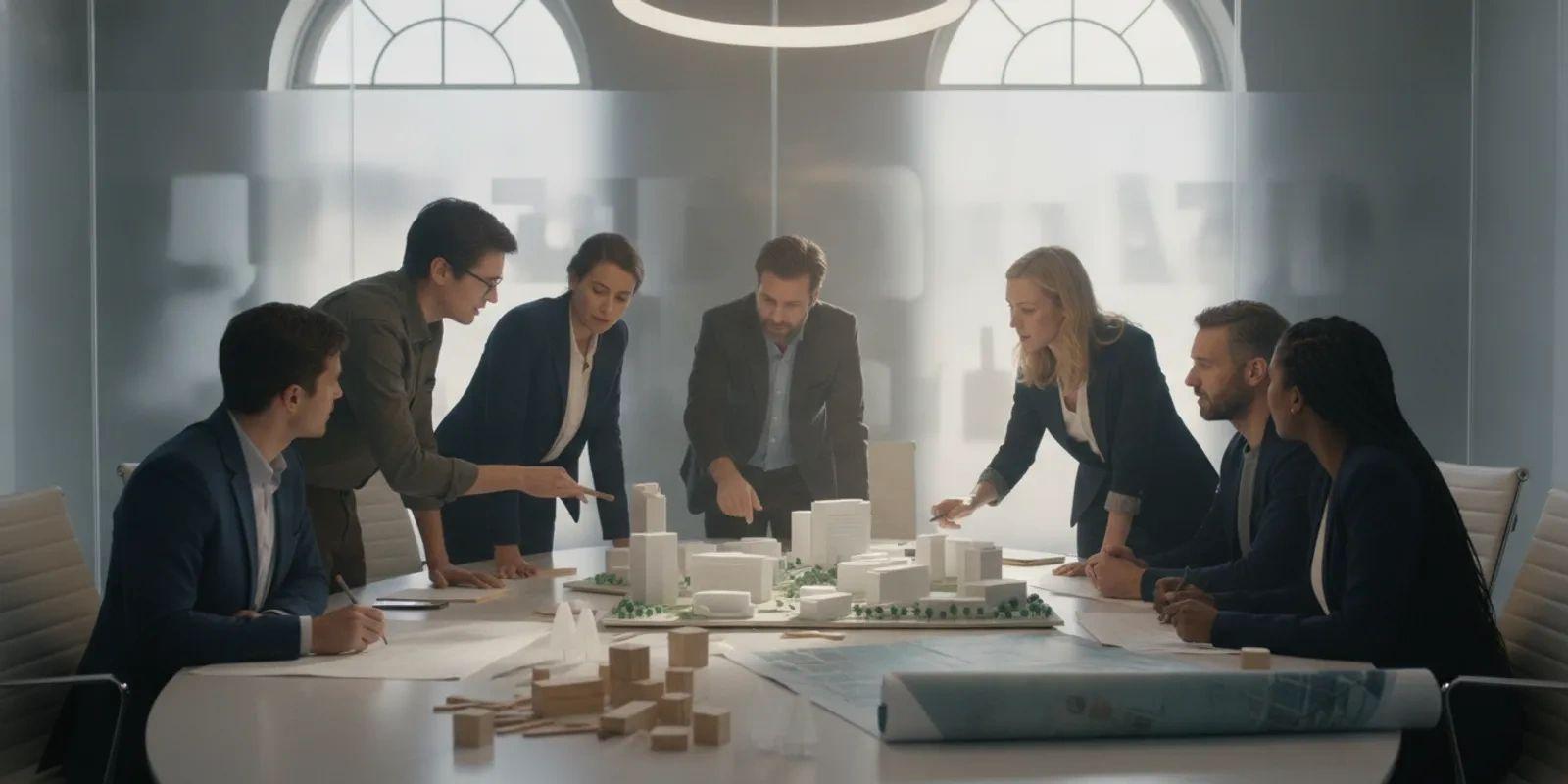
A public facility feasibility study helps a municipality test whether a proposed building can meet a documented need and be delivered under practical legal, site, financial and operational conditions. It should compare realistic alternatives, show what is known and uncertain, and identify the decisions needed nextânot promise that the project will proceed or that one delivery method will be cheaper or faster. For a project-specific feasibility conversation, request a consultation.
What does a public facility feasibility study answer?
A feasibility study turns a broad facility idea into a set of questions elected officials, finance staff, facilities teams and the public can examine. It should explain the service problem the project is meant to solve, the options considered, the assumptions behind the analysis, the unresolved risks and the decisions required before a larger commitment. It is a planning document, not a final design, procurement award or financing approval.
The study should not start by assuming a new building is the only answer. Depending on the service and local circumstances, the comparison might include maintaining the existing asset, renovating it, replacing it, sharing space or developing a new facility. These options need to solve the same defined need to make comparisons meaningful.
A useful study addresses at least the following:
- Need and service outcomes: What current service, capacity, condition or continuity issue requires a response?
- Scope and requirements: What functions must the facility support, and which are optional or could be phased?
- Site and constraints: Is a candidate location available and suitable, subject to due diligence?
- Authority and approvals: Which public bodies, legal requirements, procurement steps and community decisions may apply?
- Delivery and funding: Which delivery structures merit comparison, and what assumptions drive each option?
- Operations and lifecycle: Who may perform and pay for maintenance and operations, and what obligations continue after opening?
- Decision path: What evidence, approvals and next-stage work are needed before a commitment?
The UK Government guide to feasibility studies frames feasibility as assessing whether a proposed change is achievable and worthwhile in practice. Its public-program context is not a substitute for local rules, but the central discipline applies: define the decision, test alternatives and make assumptions visible. For a U.S. example focused on local public facilities, the Washington State Department of Commerce describes its Public Facility Feasibility Reviews Program as supporting objective, timely analysis of financial feasibility.
Why should a municipality study alternatives first?
Early analysis can reveal that the central issue is not simply a shortage of floor area. A fire station may need a response to operational constraints that differs from the needs of a civic administration building. A public works facility may be driven by equipment, circulation or maintenance needs. The project brief should connect the facility type to the public service and users involved rather than assume that one building solution fits all.
Without a clear need statement, a study can compare options that do not deliver the same service. One alternative might include essential space only, while another includes a broader program, different site conditions or a different operating model. Their apparent costs and benefits are not comparable until scope, timing, service assumptions and risks are aligned. If a distinction cannot be aligned, state it plainly and explain how it affects the comparison.
Start with evidence the municipality can explain: current condition assessments, service demands, space utilization, known deficiencies, operating constraints, maintenance history and relevant plans. Identify what is documented, what is estimated and what needs field verification. If projections are used, record their source, time horizon, assumptions and sensitivity. A projection should inform discussion, not disguise uncertainty as a measured fact.
Then set decision criteria before selecting a preferred path. Criteria might include service continuity, site suitability, lifecycle affordability, operational flexibility, public access, resilience needs, approval complexity and the municipality's ability to manage the project. Define how each criterion will be evaluated. If officials assign relative importance to criteria, document the weighting and ask whether changing it would change the preferred option. That simple sensitivity check can reveal whether a recommendation rests on a robust advantage or a narrow set of preferences.
How should the project need and scope be defined?
Write a concise problem statement that describes the public service at issue, who uses it, what is not working or may not meet future needs, and the consequences of leaving the issue unaddressed. For example, âthe department needs a new buildingâ is a proposed solution, not a need statement. A more useful starting point identifies the service functions that cannot be supported reliably in current space and the evidence behind that conclusion.
Translate the need into functional requirements. Define the activities the facility must support, essential adjacencies, access requirements, equipment needs, security or continuity considerations where relevant, and likely operational relationships. Separate requirements that are essential to service delivery from preferences that may improve convenience but are not necessary. This helps prevent an early concept from becoming an unexamined scope commitment.
Set boundaries for the study. State which facility, services, sites and delivery options are included; the planning horizon; the level of cost and technical detail; and the decisions the work is intended to inform. If a department requests a building concept while elected officials are still deciding whether the service need warrants a project, clarify that sequence. Analysis at an early screening level can identify fatal constraints and questions needing more work, but it should not be mistaken for a site investigation, final design, procurement document or financing commitment.
Keep an assumptions register. For each assumption, record its source, confidence, responsible party and the point at which it must be confirmed. A statement such as âthe parcel is availableâ can carry major consequences if ownership, access, utilities, environmental conditions or acquisition requirements have not been checked. Assign a person or department to close each material information gap and set a decision date for doing so.
What site questions belong in the study?
Site screening should distinguish between a location that appears promising and one that has passed due diligence. A desktop review may identify candidate parcels, access patterns, surrounding uses, apparent utility availability and potential constraints. It does not establish legal control, buildability or the absence of environmental or geotechnical issues.
For each candidate, record both the evidence and the remaining checks. Consider site control and acquisition path, parcel size and configuration, access for users and service vehicles, utility connections, known easements, land-use compatibility, permitting context and potential environmental or geotechnical investigation. The specific technical reviews depend on the parcel and project. A feasibility document should state where specialist verification is still required instead of reporting a preliminary screen as a final finding.
Compare candidate sites against the same requirements. A simple site matrix can list each criterion, the available evidence, the consequence if the assumption is wrong and the next verification step. For instance, if access appears adequate on a map, the next question may be whether turning movements, emergency access or traffic conditions need technical review. If a utility connection appears nearby, confirm capacity and connection conditions rather than treating proximity as proof of service.
If one site has a meaningful advantage, explain its basis and any associated tradeoff, such as acquisition steps, access, utility work or a longer approval path. Do not call a site âreadyâ solely because it is publicly owned or visually clear. Project structuring may involve site selection and other disciplines, but the municipality should confirm the scope and diligence required for its own proposal. Civic Six Partners describes work involving public facilities and project development in its services overview.
How should approvals and public authority be assessed?
A study should identify approvals and decision points that could affect the project without claiming to resolve jurisdiction-specific legal questions. The municipality may need to examine governing authority, procurement requirements, land-use approvals, public notice, budget procedures, voter or other approvals, and state-law conditions relevant to a proposed delivery structure. Requirements vary by jurisdiction and project, so a checklist from another locality is not a legal determination.
Build an approvals map with the decision-maker, required action, likely sequence and unresolved question for each item. Distinguish internal policy from statutory requirements. Note whether a decision is a prerequisite for the next step or can occur later, and identify who is responsible for confirming the interpretation. Counsel and appropriate public officials should verify legal conclusions. Do not assume a particular financing or delivery arrangement removes competitive procurement, public approval or other obligations.
Community engagement can surface requirements technical studies miss. Explain the service need, alternatives under consideration, known tradeoffs and what remains undecided. Invite feedback early enough to inform the project brief. Use accessible language and make clear which questions are open for input and which decisions rest with a designated public body. Engagement is not a substitute for formal approvals, and a meeting or survey should not be described as public authorization.
Keep a record of feedback and show how it was considered. If residents raise concerns about access, neighborhood impacts, service continuity or operating hours, route each issue to the relevant technical or policy reviewer. The record need not suggest every concern will change the project; it should demonstrate that input was logged, evaluated and answered or assigned for further work.
Which delivery and financing alternatives should be compared?
The study should compare plausible options on a consistent basis, not treat one structure as the default. Depending on local authority and project facts, a municipality may evaluate traditional public delivery, design-build, construction manager as general contractor (CMGC), progressive design-build or a public-private partnership (P3). The inclusion of an option in a study does not establish that it is legally available, suitable or offered by any particular firm.
For each alternative, describe the likely public and private responsibilities as assumptions to be tested. Consider who would arrange financing, manage design and construction, hold site or asset responsibilities, coordinate permits, maintain the facility and bear specified risks. Actual allocation depends on the procurement, contract, law and project; the delivery label alone does not answer these questions. A responsibility chart can make a comparison concrete: list each major task, the party expected to lead it, the public entity's retained role and the question still requiring confirmation.
A P3 can involve private financing and development with a public entity making payments under a long-term agreement. Build-lease-transfer (BLT) is one educational model, not the structure of every P3. Potentially limited upfront capital must be weighed against contractual payments over time. Lease payments may cover development, construction, financing and fees, and cumulative payments can exceed traditional financing. A study should compare total obligations and public responsibilities rather than describe a facility as cost-free.
Public entities may also evaluate municipal bonds, grants, public loans and other funding paths as part of a broader options analysis. Do not imply that a project-development firm administers or issues every instrument being compared. The study should identify responsible public and external parties and the conditions that could affect availability. A financing source that has not been approved or awarded belongs in the analysis as a possibility with stated conditions, not as committed funding.
For an overview of how Civic Six describes a P3 process, review its P3 101 guide. Its public-private partnership FAQs discuss general questions about roles and end-of-term choices. These resources explain general considerations; project terms require project-specific review.
How can lifecycle affordability be evaluated?
Capital cost is only one part of the decision. Identify the expected public obligations across the period being compared, including design and construction, financing, operations, maintenance, renewal needs and end-of-term responsibilities where applicable. Explain whether figures are estimates, planning allowances or contractual amounts. At a feasibility stage, an estimate is not automatically a bid, guaranteed price or final budget.
Use a common scope and time horizon when comparing alternatives. If one option includes maintenance or financing and another does not, show the difference rather than presenting their totals as directly comparable. State how inflation, timing, contingencies, asset condition and renewal assumptions are handled. Where data are too uncertain for a precise number, describe the range or uncertainty and identify what analysis would narrow it. Avoid a falsely precise total that hides uncertain inputs.
A practical comparison can separate several layers. First, show costs paid during planning and construction, and identify the assumed timing and funding source. Second, show recurring obligations during operation, including any contract payments and the costs that remain with the public entity. Third, describe major renewals and end-of-term responsibilities. Then explain which categories are included in each option and which are not yet estimated. The same categories should appear in each alternative, even if a category is not applicable or remains unquantified.
Ask finance staff to examine cash-flow timing, budget capacity and the source of funds under each option. Ask facilities staff to identify operational and maintenance needs. Ask counsel and finance professionals to review applicable contract, accounting and debt-treatment questions. These matters depend on local standards and the final structure; a feasibility study should not promise off-balance-sheet or off-debt treatment.
Risk allocation also has an economic dimension. A contract may assign certain responsibilities to a party, but that does not mean the public entity has no residual risk or oversight duty. For each major risk, identify the event, the proposed allocation, the party best positioned to manage it, the evidence supporting that view and the public consequences if the assumption fails. For example, a construction risk discussion should state what the study assumes about scope definition, change control and responsibility for decisions that remain public.
What should the study say about operations and the end of the term?
Consider how the facility will function after opening. Who will oversee operations? Who will handle routine maintenance, major repairs, replacements, insurance or service continuity? Which duties remain public, and which might be assigned by agreement? These are questions to resolve, not assumptions to hide in a summary. A building that meets the initial service brief may still be difficult to operate if responsibilities, staffing and renewal needs are left vague.
For a long-term lease or other P3 arrangement, examine obligations over the agreement's life and the condition expected at key milestones. The end of the term could involve lease expiry, a transfer of ownership or a negotiated continuation, depending on the agreement. The public entity should understand condition standards, renewal decisions, handback obligations and options before entering a structure. Do not assume that title transfers automatically or that the public entity has a particular end-of-term choice without reading the terms.
Ask for a responsibility matrix that names each function and the party expected to perform it, subject to legal and procurement review. Pair the matrix with an explanation of oversight, reporting and remedies. A delivery model is not fully understood until the municipality can see who does what, who pays, how performance is monitored and what happens if an obligation is not met. Clarify which duties require municipal personnel or decisions even when another party performs the work.
Who should contribute to the feasibility work?
The appropriate team depends on the facility, stage and questions under review. Municipal leadership can define policy priorities and decision authority. Facilities and public-service staff can describe current operations and requirements. Finance staff can test affordability and funding assumptions. Procurement staff and counsel can identify process and authority questions. Technical specialists may be needed to examine sites, building conditions, utilities or other project-specific matters.
Community representatives and facility users can help clarify service needs and practical concerns. If the municipality uses outside advisers or delivery partners, define their scope, independence, deliverables and relationship to any later procurement. Separate early planning advice from a future selection process, consistent with local rules. The study should disclose who prepared each analysis and what information that person relied on, particularly where the contributor may have an interest in a later project role.
A clear governance plan avoids gaps and conflicting assumptions. Identify who owns the study, who supplies data, who reviews findings and who has authority to approve the next stage. Record dissenting views or material uncertainties rather than smoothing them away for a cleaner recommendation. A short review log can show when departments received drafts, what was corrected and which disagreements remain open for decision-makers.
What are the stages of a practical study?
- Authorize the question. Define the public need, scope of analysis, decision authority, planning budget and intended use of findings. State whether the immediate decision is to study further, choose a site, prepare a procurement or take another specific step.
- Collect baseline information. Assemble facility condition and utilization information, service needs, operating data, site records, relevant plans and existing constraints. Track the source and date of each item, and flag outdated or incomplete records.
- Set requirements and criteria. Separate essential functions from preferences and agree how alternatives will be evaluated before a preferred choice is selected. Test whether each criterion reflects the public need rather than a favored solution.
- Screen alternatives and sites. Identify feasible paths for further review, document why options were removed and state where diligence is incomplete. Preserve a short explanation of rejected alternatives so later readers can understand the decision.
- Develop delivery and cost assumptions. Use consistent scope and time periods; identify responsibility, financing, operations, maintenance and approval assumptions. Show what is estimated and what remains unpriced.
- Review risks and dependencies. Create a register of major uncertainties, potential consequences, verification steps and decision owners. Link each major risk to a proposed action rather than listing it without a response.
- Engage and validate. Test findings with relevant public departments, counsel, finance professionals, technical advisers and the community as appropriate. Revise or qualify the analysis when new evidence changes an assumption.
- Recommend a decision gate. State whether to stop, gather more evidence, revise scope or proceed to a defined next stage, with required approvals and conditions. Identify the evidence required before that gate can be passed.
The recommendation should be traceable to the evidence. If the study says âproceed,â specify what that means. It could authorize more detailed due diligence or procurement planning rather than final construction or a financing commitment. A decision gate should have an owner, a defined question and conditions that can be checked; âcontinue planningâ by itself is too vague to guide staff.
What should the final study deliver?
A useful report is organized around a decision rather than around the work performed. An executive summary should state the question, the options considered, the key findings, the recommendation and the limitations. Readers should be able to tell whether the recommendation is conditional and what must happen before the municipality can rely on it.
Supporting materials can include the project brief, facility and service baseline, site-screening record, approvals map, alternatives comparison, cost assumptions, responsibility matrix, risk register, engagement record and a next-stage work plan. Each attachment should have a clear purpose. A long appendix does not compensate for a missing explanation of how evidence supports the conclusion.
Make the analysis auditable. Label estimates with dates and sources, distinguish measured facts from working assumptions, and explain any exclusions. If information is unavailable, state whether the omission could materially change the recommendation. For example, if utility capacity has not been confirmed, note whether the site ranking is provisional and what confirmation is needed before site control or design work advances.
Where options are close, show that plainly. A recommendation can still be useful when it identifies a preferred path, but it should say what tradeoff drives the preference and what new information could change it. Where no option is ready, the best conclusion may be to gather a defined set of facts, revise the scope or pause. The value of the study is a better public decision, not a predetermined âgo.â
How can officials test a study with a worked example?
Imagine a municipality is considering whether to replace a civic service building whose space no longer supports current operations well. The study should not jump directly to a replacement concept. First, staff would document the specific service problems, who experiences them, and available condition and utilization information. They would distinguish a building deficiency from operational practices or service changes that might be addressed another way.
Next, the team could define comparable alternatives: continue operating with targeted repairs; renovate and reconfigure the existing building; or evaluate a replacement at one or more candidate sites. The list is illustrative, not a recommendation for any actual municipality. Each option should meet the same essential service requirements, or the study should identify where it does not. If the renovation option cannot accommodate a requirement, explain the evidence and whether that requirement is essential or could be met through another service arrangement.
The team would screen sites using common criteria, then distinguish desktop findings from checks requiring specialists. It would map approval questions and identify which officials must confirm each one. It would compare delivery approaches only after defining scope, expected public responsibilities and the time horizon. Cost analysis would show comparable categories and uncertainty, not simply a construction estimate for one option against a long-term payment total for another.
Finally, the report might recommend a conditional next step: commission specified site or building investigations, confirm authority and funding assumptions, or refine an operational requirement before selecting a delivery path. The example shows why feasibility is iterative. New evidence can change the site ranking, the scope or the viability of an alternative. A responsible process allows the recommendation to change rather than treating early assumptions as settled facts.
What warning signs should officials look for?
- The study presents only one solution and does not explain why alternatives were excluded.
- Cost comparisons use different scopes, time horizons or assumptions without a reconciliation.
- A candidate site is described as available or buildable without documenting control and due diligence.
- Legal, procurement, voter or other approvals are treated as automatic or irrelevant.
- Private participation is described as removing all public risk or responsibility.
- Long-term payments and maintenance obligations are omitted from an affordability discussion.
- A preferred structure is associated with guaranteed speed, fixed cost or savings without agreement-specific evidence.
- Uncertainty is buried in a single point estimate rather than disclosed and assigned for follow-up.
- The report does not identify who prepared key assumptions or what information they used.
- The study recommends commitment without naming required decisions, approvals and next-stage work.
These signs do not prove a proposal is unsuitable. They indicate that the municipality should request clarification, additional analysis or review by the responsible professional. Ask the study team to identify the source for a conclusion, explain the comparison basis and name any missing evidence that could change the result.
For municipalities comparing delivery structures, Civic Six Partners describes its role in public facility development and leasing on its services page. Reviewing that information can support an initial discussion, but it does not replace independent legal, financial, technical or procurement review of a particular project.
Request a project-specific feasibility conversation
Frequently asked questions
How early should a municipality start a feasibility study?
Begin when officials can describe a service or facility need but before they have locked in a site, design or delivery method. Early analysis can test whether those assumptions deserve further work. The timing and depth should match the decision being considered; an initial screening is not a substitute for later technical diligence.
Does a feasibility study decide whether a project will be approved?
No. It informs a decision by presenting evidence, alternatives, assumptions and unresolved issues. Approval authority and required public processes remain with the applicable public bodies and jurisdiction-specific procedures.
Does a P3 guarantee lower cost or faster delivery?
No. Neither outcome should be assumed. Compare project scope, lifecycle obligations, approvals, risk allocation and contract-specific evidence. A delivery method's suitability depends on local authority, market conditions and the actual agreement.
Can a P3 keep a facility off the public balance sheet?
That cannot be promised from the structure's name. Accounting and debt treatment depend on applicable standards, jurisdiction and the details of the agreement. The municipality should obtain its own finance and legal review.
What is the main output of a feasibility study?
A decision-ready record of the need, options, evidence, assumptions, risks, approval path and recommended next step. It should also identify what remains unverified so officials do not mistake preliminary analysis for final authorization.
A careful public facility feasibility study does not eliminate uncertainty; it makes uncertainty visible and gives public officials a reasoned basis to decide what to investigate, approve or defer next.