
All articlesPublic-private partnerships
How Cities Can Finance Public Facilities Without Municipal Bonds
What alternatives to municipal bonds can a city use to finance a fire station, police station, courthouse, city hall, or public works facility?

Managing Director

*What alternatives to municipal bonds can a city use to finance a fire station, police station, courthouse, city hall, or public works facility?*
Direct answer: Cities and municipalities may be able to combine capital reserves, grants, revenue-backed tools, lease-purchase structures, public facility corporations, ground leases, and privately financed public-private partnerships (P3s). The right approach depends on state law, available revenues, voter-approval requirements, procurement rules, project risks, and the public agency’s long-term facility needs.
Key Takeaways
- Traditional municipal bonds remain an important financing tool, but they are not the only way to fund an essential public facility.
- Alternative financing can help a public agency match project costs to long-term use, preserve debt capacity, phase delivery, or transfer selected development and construction risks.
- Private financing is one alternative, not a universal replacement for bonds, and is often paired with a long-term lease or P3 delivery structure.
- Financing and project delivery are different decisions. A city should evaluate who provides capital separately from who designs, builds, owns, operates, or maintains the facility.
- Every structure should be tested for total lifecycle cost, legal authority, procurement requirements, accounting treatment, public control, and long-term budget impact.
Why Cities Look Beyond Traditional Bond Financing
Municipal bonds can provide long-term, tax-advantaged capital for public infrastructure. However, a conventional bond issue may require voter approval, compete with other capital priorities, use limited debt capacity, or take longer than the community’s facility need allows. In some cases, a city may also want a structure that combines financing with site control, design, construction, maintenance, or eventual ownership transfer.
These considerations do not make bonds inappropriate. They create a reason to compare multiple municipal financing options before selecting a capital plan.
What Are the Main Alternatives to Municipal Bonds?
- Pay-as-you-go funding and capital reserves. A municipality may use accumulated capital funds, current revenues, asset-sale proceeds, or phased appropriations to pay for some or all of a project without issuing new long-term debt.
- Federal, state, and regional grants or loan programs. Grants, low-cost public loans, and agency-specific programs can reduce the amount that must be financed locally. Availability and eligibility vary by facility type, location, and program year.
- Revenue-backed and lease-revenue financing tools. Depending on state law, cities may consider revenue bonds, certificates of participation, lease-revenue bonds, or similar instruments supported by identified revenues or contractual payments rather than a broad property-tax pledge.
- Lease-purchase or lease-to-own structures. The public agency occupies the facility and makes scheduled payments over time, with ownership transferring at a defined point if the agreement’s conditions are met.
- Public facility corporations or public development authorities. A separate public or quasi-public entity may finance, own, or lease a facility to the municipality. The legal structure and terminology differ by jurisdiction.
- Ground leases and joint-development structures. A city may contribute land through a long-term ground lease while a partner finances and develops the improvements. This can reduce upfront land cost and preserve public ownership of the site.
- Private financing through a public-private partnership. A private partner may arrange capital to design, build, acquire, or improve a public facility and lease it to the government under a long-term agreement. Payment may be tied to occupancy, availability, performance, or another contractual structure.
A project can combine more than one of these approaches. For example, a grant may fund part of a fire station while a lease-purchase agreement or privately financed P3 funds the balance.
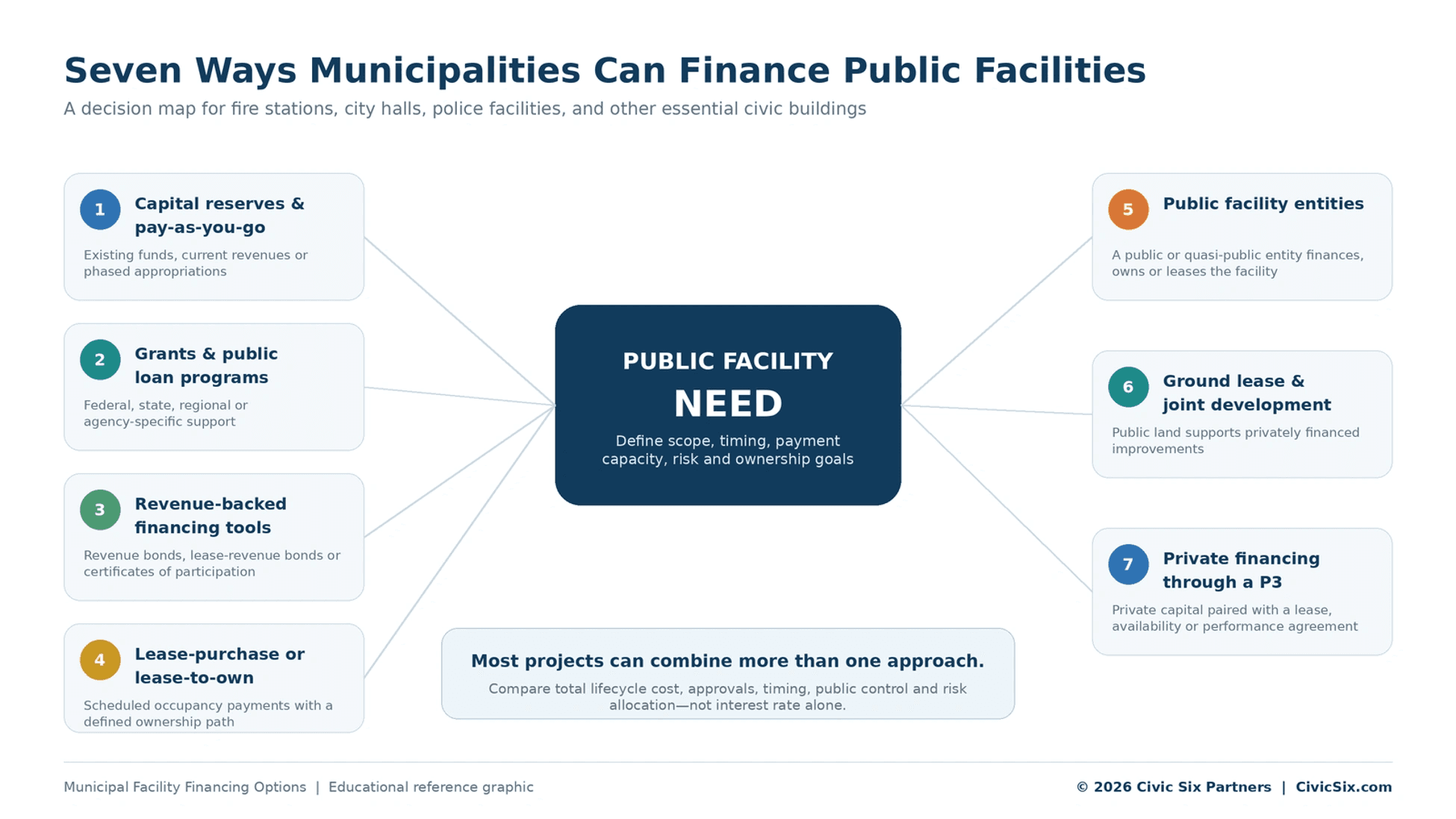
Figure 1. Seven municipal financing pathways for essential public facilities. © 2026 Civic Six Partners.
How Does Private Financing for Municipal Facilities Work?
Private financing refers broadly to capital supplied by private lenders or investors rather than through a traditional municipal bond issuance.
For a government-leased facility, capital providers typically evaluate the public tenant’s credit profile, the enforceability and duration of the lease, payment terms, project cost, collateral, construction risk, and the overall reliability of the contractual cash flow.
A common structure may include the following steps:
- A public agency defines its facility requirements and completes the approvals and procurement required by applicable law.
- A private partner controls, acquires, or otherwise secures the site, as permitted under applicable state and local law, and is responsible for some combination of design, financing, construction, ownership, operations, or maintenance.
- The municipality enters into a long-term lease, availability-payment agreement, or other occupancy arrangement.
- Private lenders or investors provide capital based on the project structure, public counterparty, contractual payment stream, and allocated risks.
- After completion and acceptance, the public agency occupies the facility and makes the agreed payments, subject to the contract’s terms and performance standards.
- Ownership may remain private, transfer at the end of the term, or move to the public agency at another agreed point.
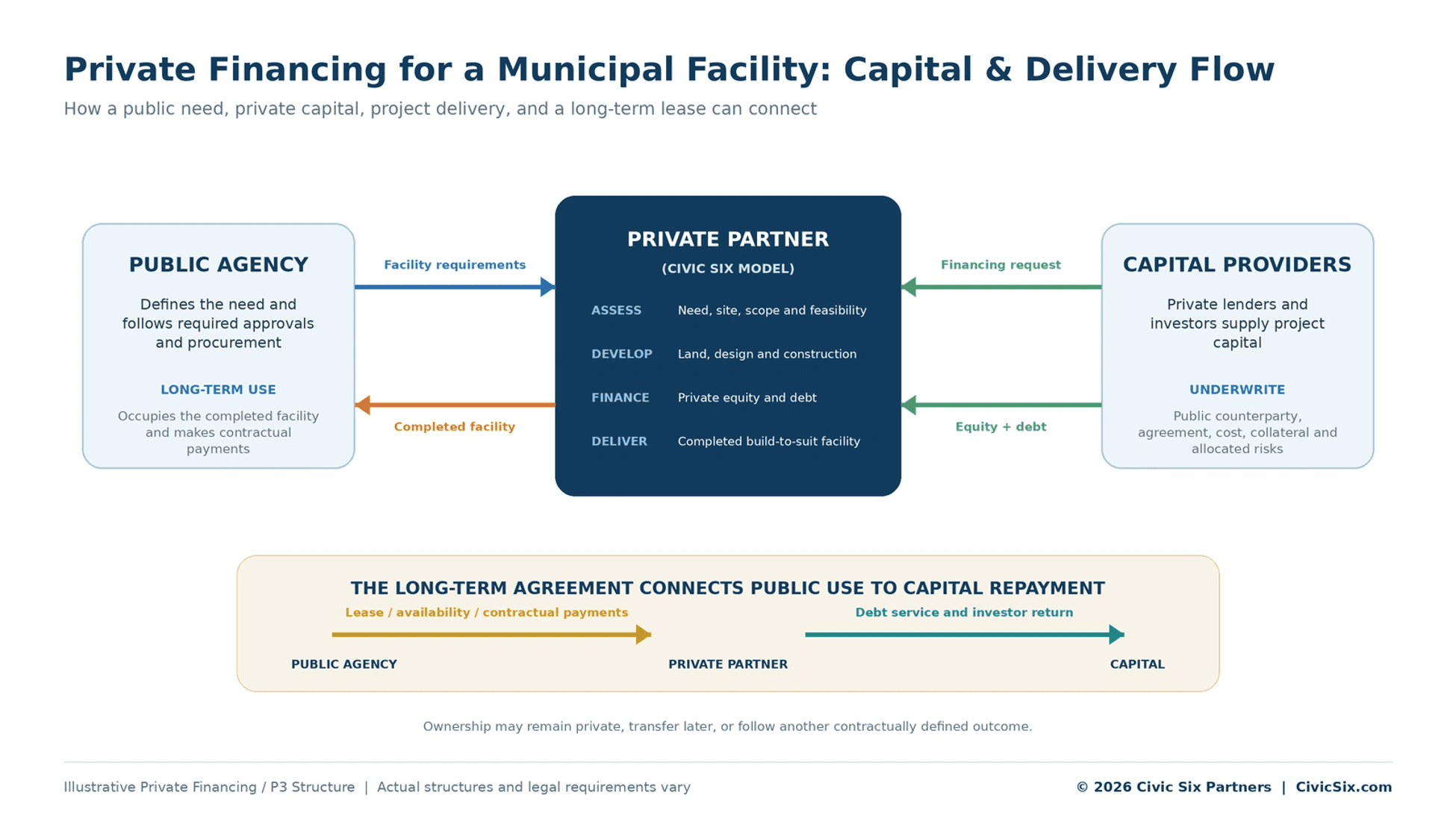
Figure 2. Illustrative private-financing and P3 capital and delivery flow. © 2026 Civic Six Partners.
Private Financing vs. Traditional Municipal Bonds
The table below provides a high-level comparison of traditional municipal bonds and private financing / P3 structures across key financing, delivery, risk allocation, and ownership considerations.
It highlights how the approaches differ, rather than recommend one approach over the other; the appropriate structure depends on the transaction, jurisdiction, credit profile, tax treatment, procurement requirements, and market conditions.
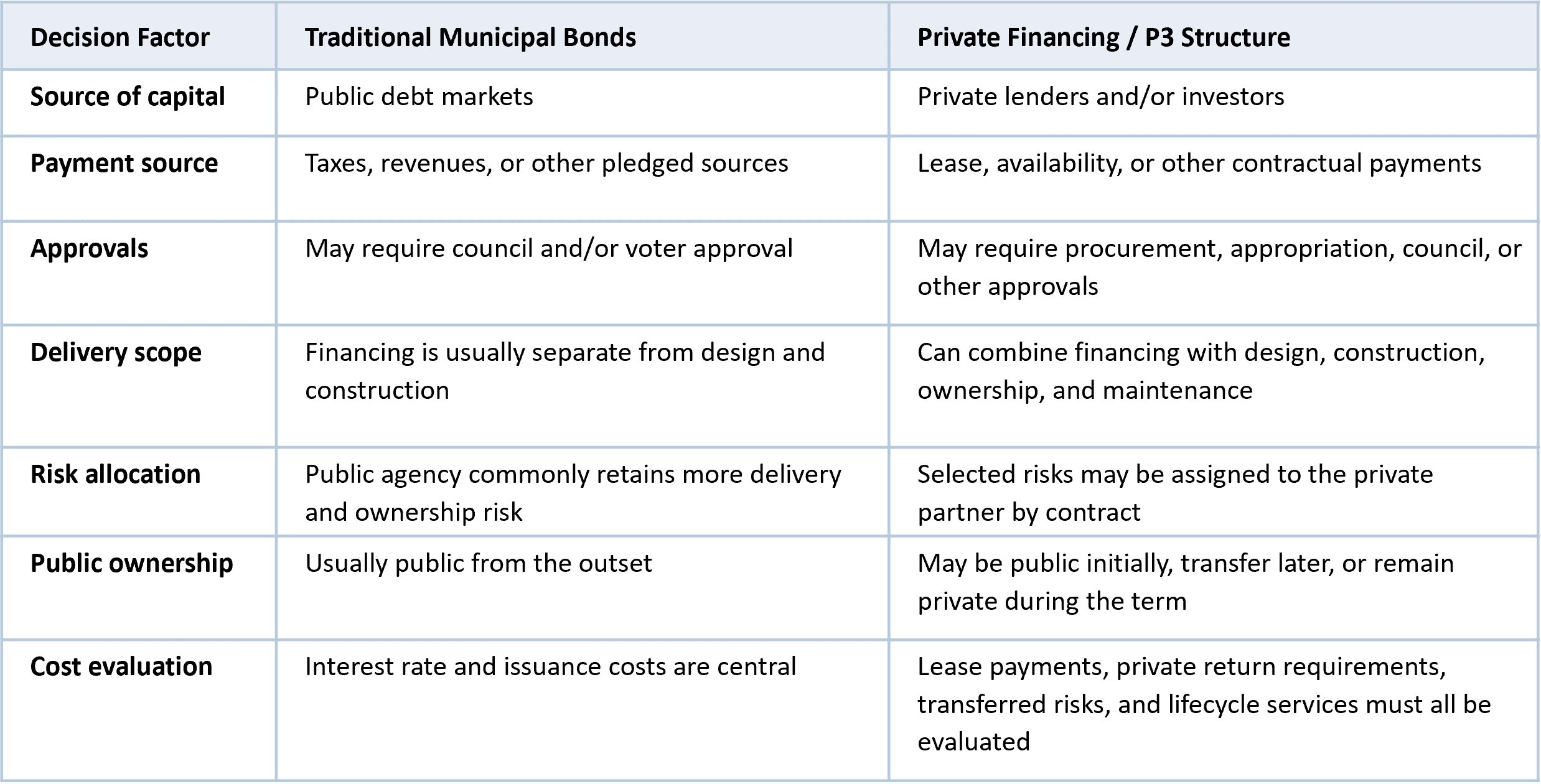
Figure 3. Comparison of Traditional Municipal Bonds and Private Financing
Potential Benefits of Private Financing
- Another source of capital: Private capital can supplement or replace a portion of public borrowing for a specific facility.
- Faster or more coordinated delivery: A single structure may integrate site control, design, construction, financing, and long-term occupancy, although procurement and approvals still require time.
- Risk transfer: The contract can assign selected development, cost, schedule, performance, or maintenance risks to the party best positioned to manage them.
- Budget alignment: Payments can be structured around the municipality’s long-term use of the facility and may provide predictable scheduled occupancy costs.
- Preservation of public debt capacity: Depending on legal and accounting treatment, an alternative structure may help preserve conventional borrowing capacity for other public priorities. This must be evaluated with the municipality’s advisors.
Risks and Questions a Municipality Should Evaluate
- What is the total cost over the full term, including financing, development, operations, maintenance, insurance, and end-of-term obligations?
- Which party bears site, entitlement, design, construction-cost, schedule, operating, maintenance, and residual-value risks?
- Does the structure require voter approval, annual appropriation, competitive procurement, or other statutory procedures?
- How will the obligation affect the municipality’s balance sheet, debt policies, credit profile, and future budget flexibility?
- What performance standards, payment deductions, remedies, termination rights, and public-control protections are included?
- Who owns the land and improvements during the agreement, and when, if ever, does ownership transfer?
- How does the risk-adjusted lifecycle cost compare with a conventional publicly financed and publicly delivered alternative?
What Types of Public Facilities Can Use Alternative Financing?
Subject to legal authority and project feasibility, alternative financing may be considered for:
- Fire stations and emergency response facilities
- Police stations and public safety campuses
- Emergency operations centers
- City halls and municipal office buildings
- Courthouses and other criminal justice facilities
- Public works and fleet facilities
- Public health and community-service buildings
- Other long-term, build-to-suit government facilities
Frequently Asked Questions
- Can a city finance a public building without traditional municipal bonds?
Potentially, yes. Depending on state law and project circumstances, a city may use reserves, grants, revenue-backed tools, lease-purchase financing, a public facility entity, a ground lease, or private financing through a P3. Many projects use a combination of sources.
- Can a city build a fire station without raising property taxes?
Sometimes, but no financing method eliminates the project’s cost. A city may be able to use existing revenues, grants, dedicated fees, lease payments, or another approved source instead of a new property-tax bond. The budget and voter-approval implications depend on local law and the chosen payment source.
- Is private financing cheaper than municipal bonds?
Not necessarily. Tax-exempt municipal borrowing often has a lower stated interest rate. Private financing may still create value when it accelerates delivery, integrates multiple responsibilities, or transfers material risks. The proper comparison is total risk-adjusted lifecycle cost, not interest rate alone.
- Is private financing the same as a P3?
No. Private financing describes the source and structure of capital. A P3 describes how the public and private parties divide responsibilities and risks. A P3 may use private financing, public financing, or a combination.
- Who owns the facility under a privately financed structure?
Ownership depends on the agreement. The private partner may own the facility during the lease term, the public agency may own it from the outset, or ownership may transfer after defined payments or conditions are satisfied.
- Can a county use a P3 for a public works facility?
Potentially, yes, if the county has appropriate legal authority and follows applicable procurement, budgeting, and approval requirements. Suitability depends on project scale, site control, payment capacity, risk allocation, and market interest.
- When should a municipality evaluate alternative financing?
A municipality should consider alternative financing early in the planning process, particularly when it has a legitimate public need but the traditional capital process may not align with the project’s timing, funding capacity, or risk profile. Early evaluation allows the municipality to compare public and private approaches using the same project scope, schedule, risk allocation, and lifecycle-cost assumptions.
Private financing, in particular, may warrant consideration when bonding capacity is constrained, a bond referendum has failed, construction costs are escalating, or the community's public-safety needs can make waiting several years for a conventional capital cycle more expensive than acting. It may also be appropriate when the municipality can support a predictable long-term payment structure or when private participation could provide value beyond the financing itself, such as faster delivery, greater cost certainty, appropriate risk transfer, or preservation of public borrowing capacity.
A Practical Starting Point for Municipal Leaders
A city considering a new public facility should begin with a side-by-side feasibility analysis of conventional bond financing and credible alternatives. The analysis should use a consistent project scope and compare approvals, timing, payment sources, total lifecycle cost, risk allocation, public control, ownership, and long-term budget effects.
Civic Six Partners helps public agencies explore how public-private partnerships, alternative financing, and integrated project delivery may apply to essential public facilities. The goal is not to promote one financing method, but to help government leaders identify a structure that fits the community’s needs, legal framework, and long-term financial objectives.
*Important note: Municipal finance, procurement, tax, accounting, and voter-approval requirements vary by state and jurisdiction. Public agencies should consult their municipal advisor, bond counsel, legal counsel, financial staff, and other qualified professionals before selecting a financing or delivery structure.*