
All articlesPublic-private partnerships
Public Service Building Construction Costs: What to Budget
Public service building construction costs are not a price per square foot you can look up and trust. A city hall, public counter building, or other civic service facility costs what its program, site, delivery path, and...

Managing Director
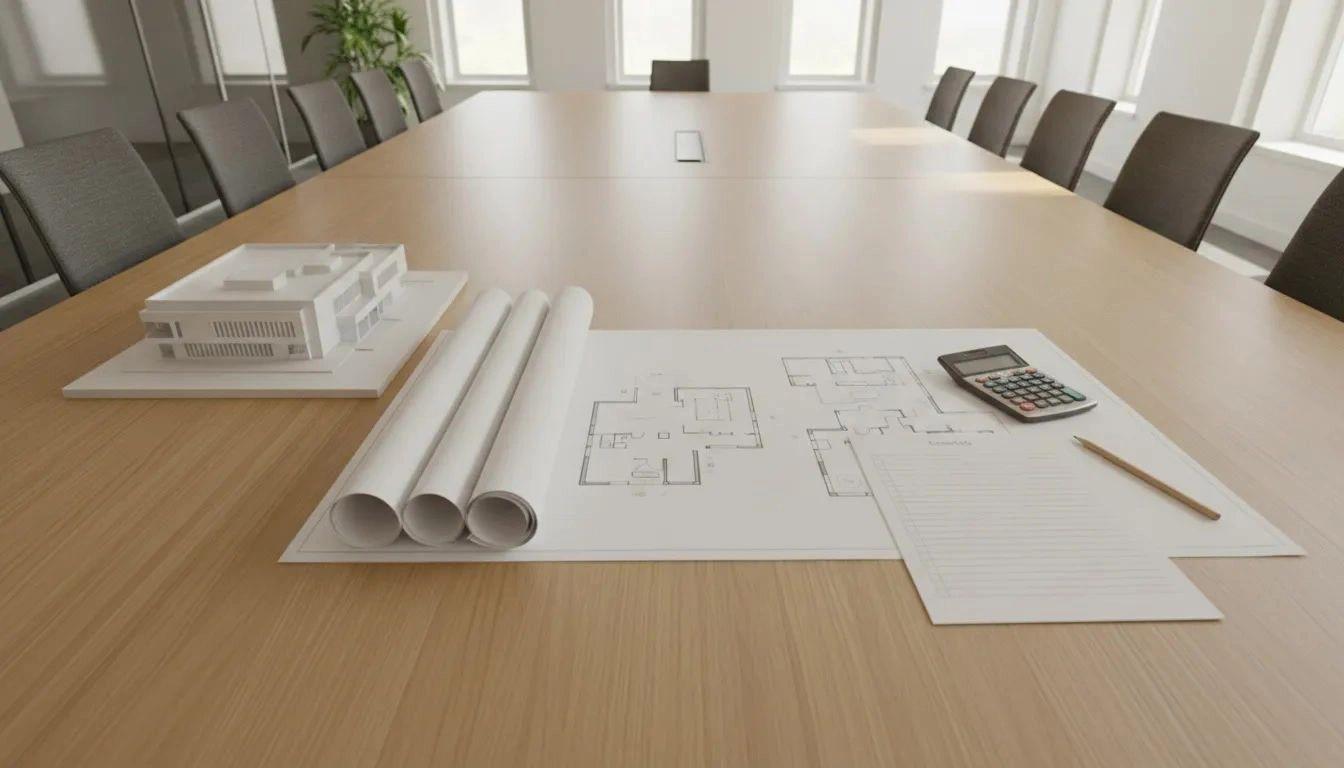
Public service building construction costs are not a price per square foot you can look up and trust. A city hall, public counter building, or other civic service facility costs what its program, site, delivery path, and long-term use require. Start with those facts. Then build a budget that separates the first project cost from the cost of owning and operating the building.
What public service building construction costs should include
Write the scope before you price it. Name who will use the building, which public services it must support, the capacity it needs, and any security, resilience, or access requirements. A public service building might hold offices, public counters, meeting rooms, records storage, secure areas, or a vehicle bay. Each of those choices changes the design, and the design changes the cost.
Sort the estimate into categories reviewers can check. Two proposals that look similar can hide different exclusions. A useful budget shows what is in, what is out, and what is still a guess.
- Site and early planning. Surveys, utility connections, access, environmental review, and feasibility work, when the project needs them.
- Design and approvals. Architecture, engineering, permitting, code review, and other professional services the jurisdiction requires.
- Construction. Structure, building systems, finishes, site work, fixed equipment, and any specialized rooms in the approved program.
- Project administration. Owner-side oversight, testing, commissioning, and legal or financial review tied to this project.
- Transition and operations. Moving, staff preparation, utilities, maintenance, repairs, and later renewal of building systems.
The categories and who pays for each one vary by jurisdiction and by agreement. Do not assume two estimates cover the same work just because both quote a building cost.
A planning figure and a bid are not the same document. Early on, a city may only have a range based on a draft program and a site that is not fully studied. That range is useful for deciding whether to keep going. It is not a promise. Label it as planning-level, name its date, and list what it leaves out. Later estimates should get tighter only when the program, site facts, and procurement plan are clearer.
Watch soft costs. Design fees, permits, owner advisors, testing, moving, and furniture can sit outside a construction number and still be real money. Ask every estimator which of those items are inside the figure. If furniture, technology, or a records system is required on day one, put it in the budget or say plainly that another fund will cover it.
Which factors move public service building construction costs
Program and capacity. A larger floor area can mean more materials, but area alone does not explain the number. Public counters, controlled access, hearing rooms, or long operating hours can cost more than a basic office of the same size. Write the required functions next to any area figure so reviewers can see what the number assumes.
Site conditions. Utilities, access, grading, drainage, environmental conditions, and work on existing improvements all change scope. Before you lean on an early budget, list what the team knows about the site and what still needs investigation. Treat unknown site conditions as open risks, not as settled costs.
Building systems. Structure, heating and cooling, electrical capacity, technology, security, accessibility, and durability should match how the building will be used. Changes after design or procurement often add cost. An owner-approved program makes it easier to say whether a feature is essential, optional, or better left for a later phase.
Market and schedule. An estimate depends on when the work is priced, how it will be procured, and the labor and material assumptions behind it. Ask for the pricing date, plus allowances, exclusions, escalation, and contingency. Treat a target date as a planning assumption unless the project documents commit to it. A delivery model does not, by itself, guarantee a date or a fixed price.
How to compare public service building construction costs
Compare like with like. Do not set a construction estimate from one option next to a financing payment from another and call that a savings. Separate the cost of designing and building the facility from the way the public entity pays for it. Financing changes timing, obligations, and total payments. It does not erase the cost of the building.
A city may look at bonds, grants, public loans, a lease-related approach, or a public-private partnership. Those are different tools. Which ones are available depends on local authority, funding, procurement rules, and the project itself. Civic Six Partners does not sell or issue those instruments. A city and its counsel decide which ones to study.
A public-private partnership, or P3, is a long-term contract, not a single product. Civic Six explains on its FAQ page that roles for financing, permitting, acquisition, design, construction, and operations are set project by project. One possible structure is to develop the facility and lease it back under a long-term agreement. That can limit upfront capital. It is not free, and cumulative lease payments can exceed traditional financing. Whether a payment is treated as an operating expense or as debt depends on the agreement and on local accounting rules. Do not assume an off-balance-sheet or off-debt result from the label alone.
Ask for a role and risk matrix on any proposal. See who controls scope, design changes, approvals, construction issues, and maintenance, and who bears each defined risk. Have finance, procurement, legal, and accounting reviewers test the proposal under local rules. Accounting treatment and procurement duties cannot be skipped because a private partner is involved.
What to pin down before you publish a number
A public number travels. Councils, residents, and bidders will treat it as the budget even when the footnote says otherwise. Before a figure leaves the working group, check six items.
- Basis. Say whether the number is a concept range, a design estimate, or a priced proposal.
- Date and place. Note the pricing date and the market it reflects. Costs in one state are not a template for another.
- Inclusions. State whether land, off-site utilities, furniture, technology, and moving are in or out.
- Contingency. Show the allowance for unknowns as its own line, and say what would use it up.
- Lifecycle. Note whether maintenance, repairs, and renewals are in the same view or in a separate fund.
- Authority. Flag any choice that still needs a vote, a procurement step, or a legal review.
If one of those items is open, say so in the same sentence as the number. A range with a clear gap is more useful than a single figure that hides the gap. Update the public figure when the gap closes, and say what changed.
Also separate this building from others the city may be planning. A public service building budget should not borrow a cost from a fire station, a police station, or a community center. Those buildings have different rooms, different hours, and different durability needs. Link the related plans so readers can find them, but keep each estimate on its own program.
Read the estimate the way a reviewer will. Start with the total, then open each category and ask what would change it. A site allowance that assumes utilities are already at the lot is not the same as one that includes a new service line. A construction figure that assumes standard office finishes is not the same as one that includes secure counters and a public lobby built for daily traffic. Write those assumptions in plain language next to the line they affect.
Keep a short change log. When the program grows, the site study finds a problem, or the pricing date moves, note the old figure, the new figure, and the reason. That log is what lets a council see that the budget moved because the project changed, not because the first number was careless.
Build the estimate in six steps
- Confirm the service need. Describe the public functions, users, capacity, hours, and spaces the building must support.
- Test the site. List what is already known, then commission the investigations the site still needs before you treat assumptions as facts.
- Set one common scope. Give every estimator the same program, quality level, and schedule assumptions.
- Split known costs from allowances. Show estimates, contingencies, exclusions, and open decisions as separate lines.
- Add lifecycle duties. Put maintenance, repairs, operations, and end-of-term responsibilities next to construction and financing.
- Refresh at each decision. Update the estimate when scope, site facts, design, procurement, or market assumptions change.
For the lifecycle view, Massachusetts guidance says to spread the construction or purchase cost of a long-term asset over its useful life when a city costs its services. That is a budgeting idea, not a project estimate and not a financing recommendation. See the Massachusetts guide to costing municipal services.
Use that idea as a prompt, not as a formula. Ask how long major systems are expected to last, who replaces them, and whether those replacements sit in the same agreement as construction. A roof, a heating plant, or a security system can be a small line today and a large bill later. If a proposal moves those costs to the private partner, read the payment terms to see whether the city is still paying for them over time.
End-of-term choices belong in the same review. An agreement might end, transfer ownership to the public entity, or continue under a new negotiation. The budget should say which of those is being assumed. A cost comparison that stops at year one will favor the option with the smallest first check, even when later duties are larger.
Public service buildings are one of the civic building types Civic Six Partners develops, along with administration buildings, community centers, and courthouses. A cost conversation for this building type is not the same as a community-center program budget or a financing-only comparison. Keep this estimate tied to the services this building must deliver.
A feasibility talk can clarify scope, delivery questions, and the facts a project-specific review still needs. The next step depends on the municipality and on its procurement process. Contact Civic Six Partners to talk through a facility project. You can also call 888-222-1882.
Request a project-specific conversation
Frequently asked questions
Can a city estimate construction cost from square footage alone?
No. Area helps describe a project, but it misses site conditions, specialized rooms, building systems, procurement assumptions, equipment, and lifecycle duties. Pair any area figure with a written program, site facts, and a list of exclusions.
Does a P3 mean the public entity pays nothing upfront?
No. A project may be structured so the city puts in limited capital at the start. That does not make the facility free. Contractual payments still apply over time, and total payments may be higher than traditional financing. Read the proposal and the agreement, not a general description of the model.
Can a delivery method guarantee a fixed cost or a fixed date?
Do not assume that it can. Cost and schedule commitments depend on scope, agreement terms, risks, and conditions. Ask what is actually committed, which assumptions apply, and how changes or unforeseen conditions are handled.
What should reviewers compare in a financing proposal?
Compare scope, total project cost, the payment schedule, fees, responsibilities, retained risks, maintenance duties, approval requirements, and end-of-term terms. Have the city's legal, procurement, and accounting advisors review those questions for that jurisdiction.
Where does a public service building budget differ from other civic projects?
The method is similar, but the program is not. A public service building is priced around public counters, offices, meeting space, records, and secure areas. A fire station, police station, or community center has its own operational rooms and should keep its own estimate. Do not copy a cost figure from a different facility type.
A credible budget is a clear set of assumptions the city can update as it learns more about need, site, delivery options, and long-term duties.