All articlesPublic-private partnerships
Choosing a Community Center Construction Company
Choosing a community center construction company is not only a matter of comparing building proposals. Municipal leaders also need to define the public purpose, select a delivery and procurement path, understand who carr...

Managing Director
Choosing a community center construction company is not only a matter of comparing building proposals. Municipal leaders also need to define the public purpose, select a delivery and procurement path, understand who carries each responsibility, and consider long-term operating and financing costs. Contact Civic Six about your community facility needs to discuss a project-specific feasibility conversation.
Discuss your community center project
What should a public owner expect from a community center construction company?
A construction company may provide preconstruction input, estimating, construction management, or building work under a defined contract. A development partner may have a broader role, potentially including project structuring, financing, and coordinating delivery. These labels do not establish a standard scope. The owner should confirm exactly which entity is responsible for each task and which decisions remain public.
Civic Six describes its work as project-specific financing and development of public facilities, with possible long-term lease-back arrangements to public entities. That is one possible path, not a universal construction contract or a promise that every project uses the same structure. Municipalities should review proposed terms, responsibilities, and alternatives before deciding whether such an approach fits.
How can a municipality define the project before seeking partners?
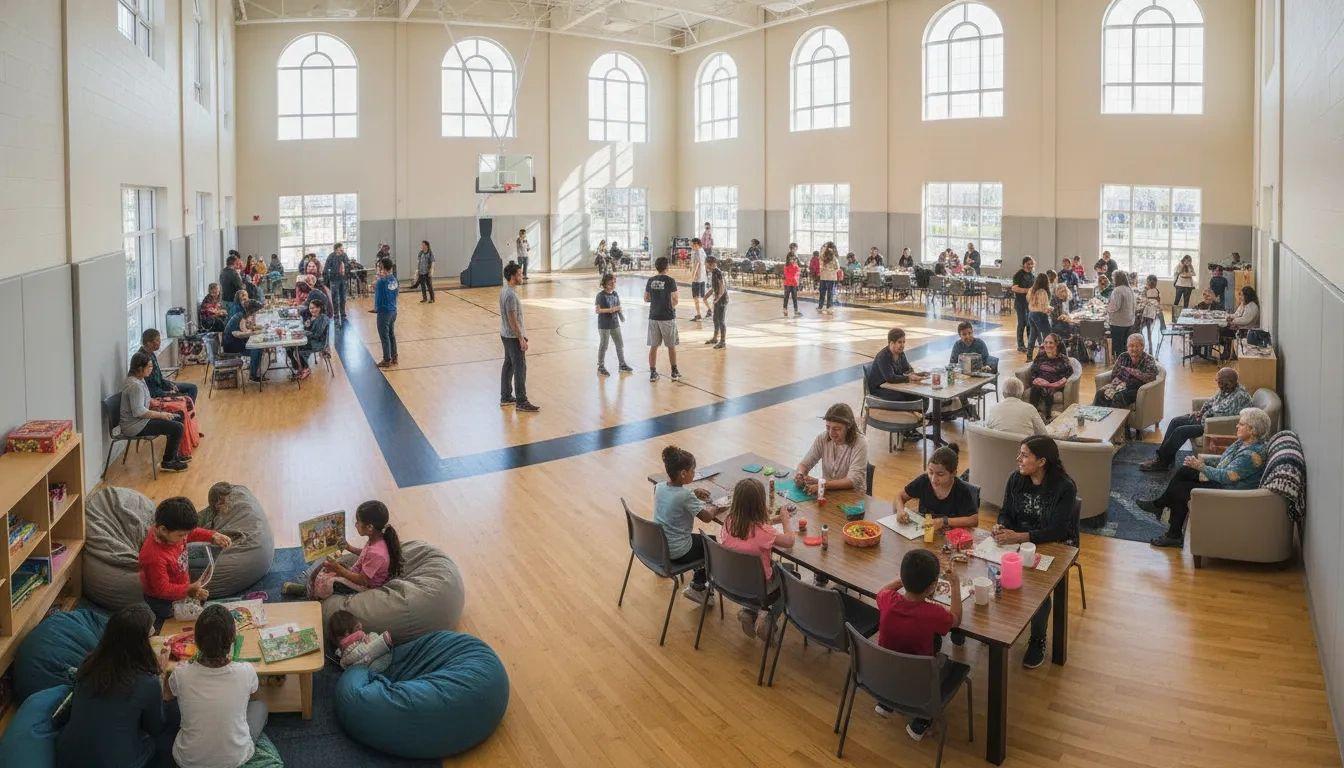
Start with the public need rather than a preferred building or financing model. Record who will use the center, what services it must support, when it is needed, and how the facility should adapt as programs change. Public input can clarify priorities such as meeting rooms, accessible entry, flexible activity space, secure storage, parking, and connections to surrounding civic services.
Then establish a brief that describes:
- Programs, user groups, capacity assumptions, and hours of operation.
- Site constraints, utilities, access, environmental considerations, and any property decisions still open.
- Required spaces, flexibility, accessibility, security, and technology needs.
- Initial project boundaries, approval milestones, and the public process for evaluating options.
- Expected operating responsibilities, maintenance standards, and future renewal needs.
A useful brief also names what is still unknown. If the site is not selected, say so. If operating hours, staffing, or program partnerships are undecided, list them as open questions rather than hiding them inside a building description. Partners can respond to a clear uncertainty. They cannot reliably price a requirement that has not been stated.
Keep the brief short enough for a governing body to review. One page of purpose and constraints is more useful than a long wish list that has not been ranked. When departments disagree about priority spaces, record both views and the date of the next public discussion. That record protects the later comparison from drifting toward whichever proposal arrived first.
These points give potential partners a common basis for discussion. They also help the agency identify gaps that require professional evaluation before it compares proposals.
Which delivery approach should the public agency compare?
Public owners can evaluate conventional procurement alongside public-private partnership approaches. P3 is an umbrella for contractual arrangements, not one specific financing product. Depending on the chosen model, design, construction, financing, operations, and maintenance may be bundled or assigned to different parties. A design-build-finance arrangement, for example, is not identical to a design-build-finance-operate-maintain structure. The contract determines actual duties and risk allocation.
Conventional design-bid-build keeps design and construction in separate contracts and can make price competition easier to explain. It can also leave coordination gaps when the drawings and the builder's means and methods do not line up. Design-build and progressive design-build bring design and construction closer together, which can help a city test cost and constructability earlier. Construction manager as general contractor, or CMGC, can add preconstruction advice while the public owner still holds key design decisions. None of these labels decides financing, operations, or end-of-term ownership.
A public-private partnership may bundle more of those duties, or it may cover only part of them. Ask which duties stay with the city, which move to a private party, and which depend on a lender, a designer, or an operator who is not yet named. The comparison should use the same program, the same site assumptions, and the same time horizon. A lower construction number is not a better deal if it leaves major renewal, staffing, or financing costs outside the comparison.
A lease-back may be considered in some project-specific arrangements. It can potentially reduce the need for the same level of initial capital outlay, but it creates contractual payments over time. Total payments and lifecycle costs may exceed traditional financing, depending on the project and its terms. The municipality should not assume that a lease removes public obligations, guarantees a particular accounting treatment, or avoids procurement and approval requirements.
What should be compared when reviewing potential partners?
Compare the proposed scope and evidence, not just the title a firm uses. Ask the team to identify its actual role, the entities expected to deliver each service, and the decisions or approvals required from the public owner.
Evaluation areaQuestions for the agencyWhat to clarifyRelevant experienceWhat comparable civic facility work has the proposed team performed, and in what role?Owner, contracting entity, personnel role, project stage, and permission to verify.Scope and designWho develops program requirements, design, estimates, and change processes?Deliverables, decision gates, assumptions, and public review responsibilities.Funding and paymentsWhat financing structure is proposed, and what payments continue over time?Project-specific schedules, fees, risks, end-of-term options, and comparison basis.Risk and operationsWho handles construction coordination, permitting, maintenance, and operations?Contract allocation, retained public risks, service levels, and remedies.Procurement and approvalsWhat process and approvals apply in this jurisdiction?Applicable public procurement, governing-body, voter, legal, and accounting review.
Request clear assumptions and a role matrix. A proposal should identify what is included, what is excluded, what depends on third parties, and how changes are treated. Avoid relying on unsupported claims of guaranteed schedules, fixed costs, savings, or transfer of all risk.
Ask for the people who would actually do the work, not only a firm brochure. A relevant project is more useful when the city can see the person's role, the contracting entity, and whether that person is still available. Reference checks should confirm scope and stage. A project that is still in design is not the same evidence as a completed facility in use.
Civic facility experience should be read carefully. Team members may have worked on public buildings in earlier roles. That experience can be relevant, but it does not by itself make the project a Civic Six-financed or Civic Six-contracted public-private partnership. The proposal should name the parties to any prior contract and the role being offered on this one.
How should lifecycle costs and responsibilities be assessed?
Look beyond construction-period estimates. A community center has costs and responsibilities across its useful life, including utilities, routine maintenance, repairs, staffing, insurance, renewals, and eventual adaptation. The relevant items and who pays for them depend on the project and agreement. Compare alternatives using the same assumptions and time horizon, and distinguish capital costs from ongoing operating costs.
For a proposed lease or other long-term structure, ask for a project-specific payment illustration and explanation of any fees, escalation provisions, maintenance duties, and end-of-term choices. Consider what happens if community needs change, the facility requires major repairs, or the agreement reaches its stated conclusion. Qualified legal, financial, procurement, and accounting advisers should review the arrangement under local requirements.
Operating questions belong in the same review. Who opens the building, who staffs programs, who replaces equipment, and who decides when a room is reconfigured? A community center can serve meetings, recreation, youth programs, and older-adult activities in the same week. Flexible rooms help, but flexibility still has a cost in storage, acoustics, supervision, and cleaning. Put those costs on the same worksheet as the construction estimate so the council sees one picture.
End-of-term choices deserve the same attention as the opening day. A lease may expire, title may transfer, or the parties may negotiate a continuation. Each option can change who pays for renewal and who controls future public use. Do not treat any of those outcomes as automatic, and do not describe the facility as free. Lease payments cover development, construction, financing, and fees, and cumulative payments can exceed traditional financing.
What documents and decisions help keep planning on track?
Before selecting a partner, a public agency can assemble a decision record that includes the needs brief, site information, procurement plan, evaluation criteria, funding assumptions, and approval schedule. During evaluation, retain written responses and document how each proposal addresses the same criteria. Before contract authorization, confirm the complete agreement, schedules, responsibility matrix, public reporting expectations, and dispute or change procedures.
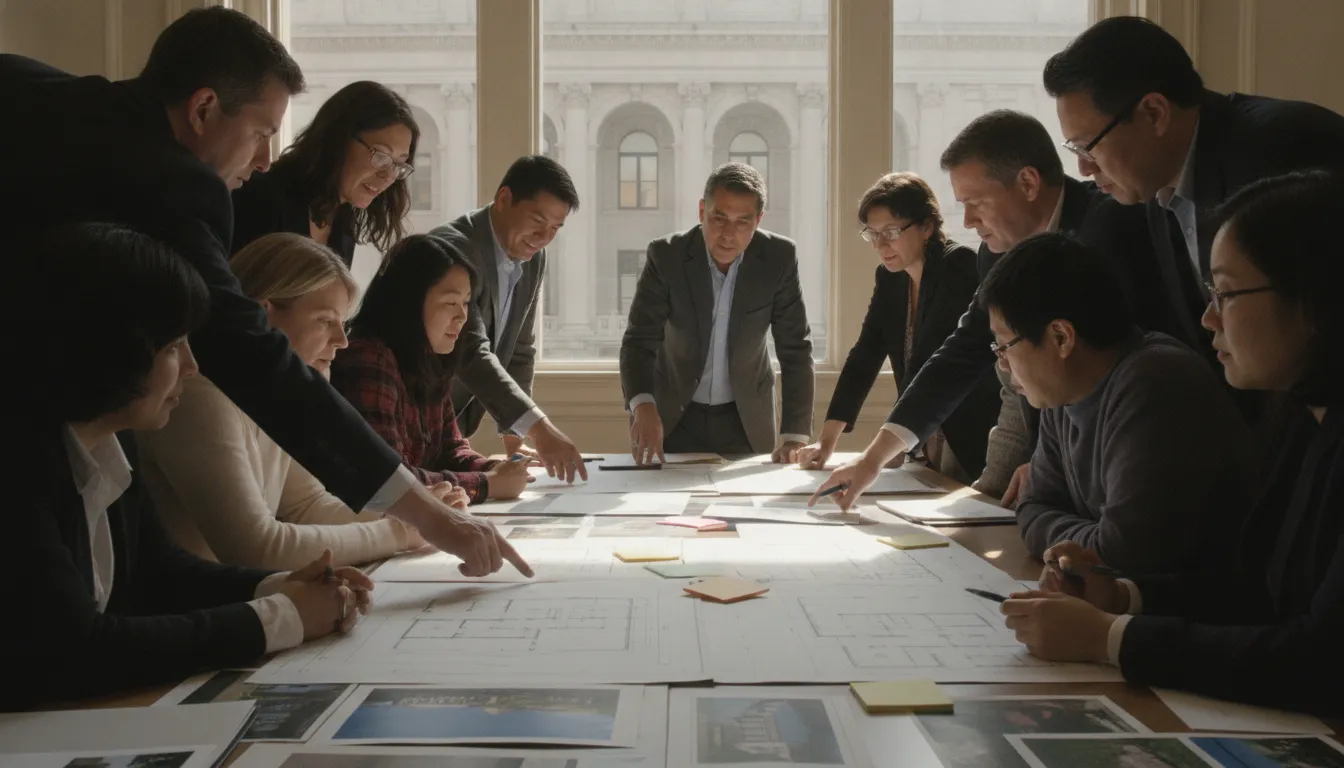
Facility planning benefits from collaboration among municipal departments and community stakeholders. Architects, engineers, contractors, and other civic representatives may contribute expertise, but their participation does not make them the public owner or determine who holds the contract. The agency should name its decision-makers and communicate how public input will inform the final scope.
A practical sequence keeps the public record readable:
- Confirm the public purpose, users, and must-have spaces before inviting delivery concepts.
- Identify the procurement path and the approvals this jurisdiction actually requires.
- Ask each team for the same role matrix, payment illustration, and responsibility split.
- Compare capital cost, operating cost, and end-of-term choices on one set of assumptions.
- Send the preferred structure to legal, finance, procurement, and accounting review before authorization.
That sequence does not guarantee a faster or cheaper building. It gives elected officials a way to see what they are choosing, what they are retaining, and what still needs a local decision. A community center construction company can be the right building partner inside that process. A development partner can be the right coordinator when the city also wants help structuring financing and delivery. The written scope, not the label, decides which one fits.
How can the city test proposals before it commits?
A short, written question set keeps interviews comparable. Give every team the same program summary, the same open site questions, and the same deadline. Ask each team to mark what it would perform, what it would coordinate, and what it expects the city to decide. If a team cannot answer without more information, that answer is still useful. It shows where the brief is thin.
Use the interview to test assumptions rather than to collect a sales presentation. Ask what would change the estimate, what could delay a permit, and which risks the city would still carry. Ask how public meetings would be supported and how comments would be recorded. A partner that can explain a tradeoff in plain language is easier to oversee than a partner that offers only a single number.
After interviews, write down why a team advanced or did not. Tie each reason to the evaluation table: experience, scope, payments, operations, and approvals. Keep rejected ideas in the file. A later council question is easier to answer when the record shows the alternative that was considered and the reason it was set aside. This is still a feasibility step. It is not a quote, a reserved price, or a promise that any structure will be available in every state.
Frequently asked questions
Is a community center construction company the same as a development partner?
Not necessarily. A construction company may have a defined building or construction-management scope, while a development partner may coordinate additional project structuring or financing. The agreement and procurement documents establish the actual role.
Does a public-private partnership mean the building is free?
No. A project may use a different timing or structure for payments, but long-term contractual payments and lifecycle costs remain important. Compare the complete project-specific economics with other available approaches.
Can a municipality assume that a private partner handles maintenance?
No. Operations and maintenance duties depend on the contract. Ask for an explicit responsibility matrix and review service expectations, costs, exceptions, and remedies.
Will a P3 remove procurement or approval requirements?
Do not assume so. Applicable procurement steps and public approvals depend on the jurisdiction and project. The municipality should obtain local legal and financial review before committing to a delivery or financing structure.
Start a project-specific feasibility conversation or call 888-222-1882.
For background on planning a community facility, consult the Child Care Center Planning Guide, which raises questions about startup and operating costs and the need for a well-conceived plan. A community center project has its own requirements, so use this as a prompt for planning questions rather than a substitute for local analysis.
A well-defined public need, transparent partner evaluation, and careful review of long-term obligations help municipal leaders choose an approach suited to their community center.